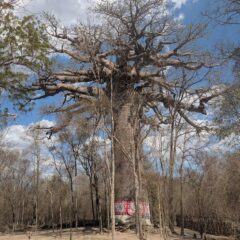
This afternoon was reserved for one of Madagascar’s most recognisable sights: the baobabs. We left the hotel and made our way towards the coast, with a few interesting stops along the way. First up was the so-called Holy Baobab, a particularly impressive old tree which is considered sacred by the local population. Unlike most trees, these giants are not simply part of the landscape – some have a special cultural and spiritual significance for the communities living around them.
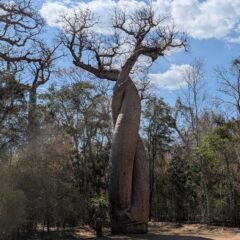
Next came the “Loving Baobabs” – two trees that have grown intertwined around each other, rather resembling a couple embracing. A slightly unusual natural monument, but certainly a photogenic one!
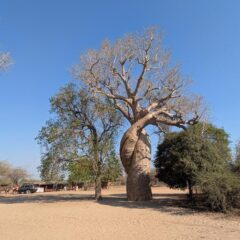
But what exactly makes baobabs so special and distinctive? Their enormous, bottle-shaped trunks can store vast amounts of water, allowing them to survive long periods of drought. They can also live for hundreds, sometimes thousands, of years. Of the nine recognized baobab species worldwide, seven are endemic to Madagascar – making the island the baobab capital of the world.
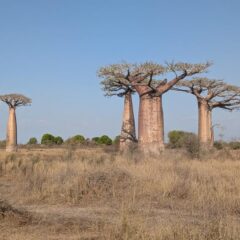
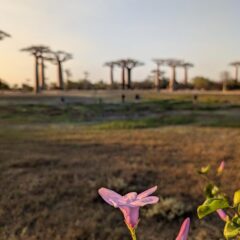
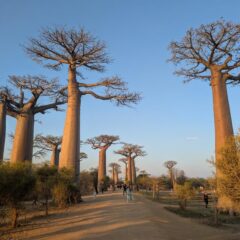
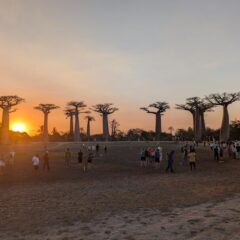
We reached the main act about an hour before sunset: the Avenue of the Baobabs.
This famous stretch of dirt road is lined with enormous baobabs, some of them estimated to be several hundred years old. Their unusually thick trunks and relatively small crowns give them an almost upside-down appearance – as if someone had planted the trees the wrong way round.
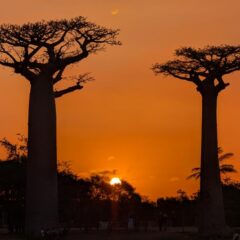
We joined the inevitable gathering of photographers and visitors waiting for the right light. As the sun slowly descended, the trees turned into dark silhouettes against the changing colors of the sky.
Less than an hour later, we were back in Morondava and on the beach. Quite a day – from lemurs and iguanas in the forest to Madagascar’s most iconic trees at sunset.