One Last Look at Tana – And a Look Back

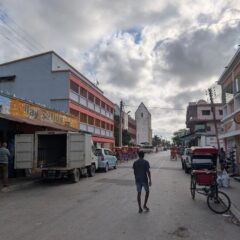
Our final day in Madagascar was a rather packed one. Before heading to the airport, we still had a short city tour of Antananarivo.

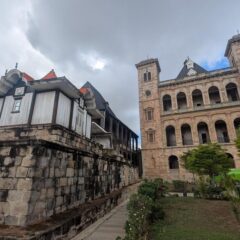
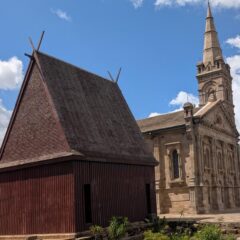
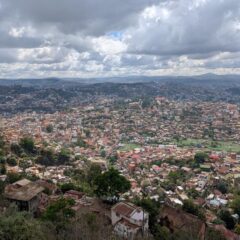
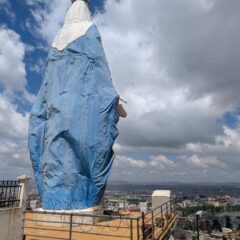
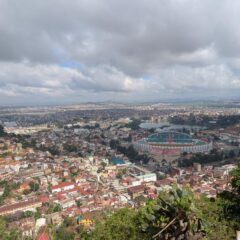
We started by making our way to the Upper Town, the historic heart of the city, spread across a series of hills. Our first stop was a viewpoint offering a panorama across the stadium, the rooftops and hills of the capital. From there, we continued to the Rova of Antananarivo, the former royal palace complex. Perched on the highest hill, it was once the seat of the Merina kings and later the rulers of the Kingdom of Madagascar. The complex includes the royal palace, tombs and other historic buildings. We had a guided tour of the museum, which provided some insights into the country’s royal history. From the grounds there were further opportunities to enjoy the views across town.

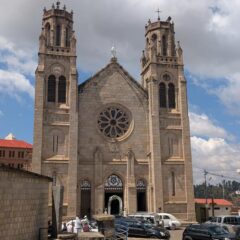
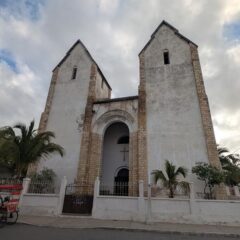
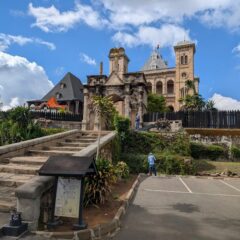
Next stop was the Cathedral of the Immaculate Conception in Andohalo. Built in the late 19th century in neo-Gothic style, it is one of the landmarks of the Upper Town. Unfortunately, a wedding was in progress when we arrived, so there was no opportunity to have a look inside.

Our final stop was the Carrefour supermarket, where we picked up a few last-minute souvenirs: Madagascan sweets, chocolate, coffee and, of course, vanilla pods – a few souvenirs and edible reminders of the trip to take home.

From there, it was straight to the airport. Check-in and security were remarkably relaxed. The flight itself, however, was a less comfortable affair. But that’s just the reality of flying in economy class in 2026.

And with that, our Madagascar adventure came to an end.

So, was it worth it? Absolutely.

Madagascar turned out to be exactly the kind of destination I had been looking for: an active adventure, plenty of opportunities to explore and discover, and a remarkable diversity of landscapes, ecosystems and wildlife. The hikes were great, the food considerably better than I had expected, and the group itself added a lot to the overall experience. There was always something new around the next corner – sometimes quite literally.

The one thing I had underestimated was the time needed to get around. Some of the driving days were substantial – and a few perhaps a little too substantial. But that’s part of traveling in Madagascar, and something worth keeping in mind when planning a trip.

All in all, a very good choice. Madagascar really is a continent on an island – a world of its own. And one I’m glad I finally got to explore.
Back to Tana – the Journey Home Begins

We had another relaxed start to the day – an extended breakfast, followed by a bit of reading time. No need to rush things just yet.

Around midday, we set off for the airport in Toliara. Our flight was scheduled to leave at 16:20, but, as these things sometimes go, it ended up being delayed by about an hour. By the time we arrived in Antananarivo, it was already dark. We made it to the hotel at around 20:45, just in time for one final dinner in Madagascar.

The coast was behind us, and with that the journey home had officially begun.

A Day of Doing Very Little (Quite Successfully)

Today was a full day off – and we made the most of it by doing very little.

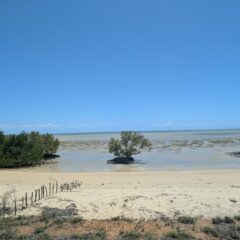
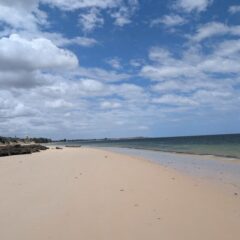
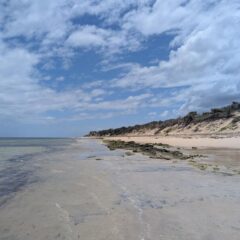
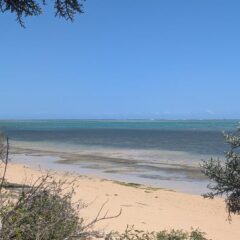
The morning started with a leisurely breakfast, once again without any fruity surprises. Afterwards, we went for a walk along the beach to Ifaty village. A nice little stroll, with the added bonus of a stop at Le Nautilus for an unusual refreshment: an espresso tonic with a side of baobab honey.

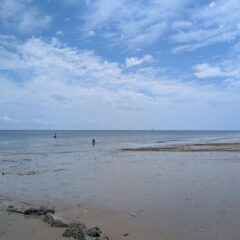
From there, it was back along the beach to the hotel. Time for a swim in the Indian Ocean – although the water was rather muddy, which did little to encourage extended swimming sessions. The rest of the afternoon was dedicated to some quality time with a book. Well, technically with the Kindle app, but that still counts.

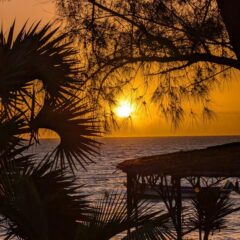
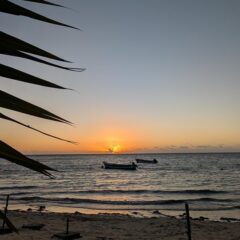
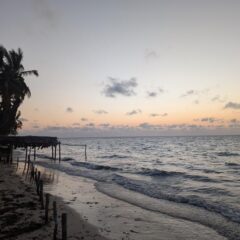
In the evening, we headed to a nearby restaurant for dinner. And before we had even ordered food, nature provided the perfect starter: a perfect sunset over the Indian Ocean.

Sometimes, doing very little is exactly what you need.

A Coastal Excursion – Pousse-Pousse, Pirogues and a Beach Walk

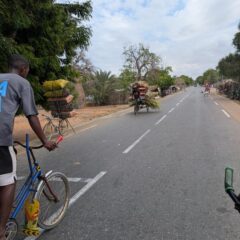
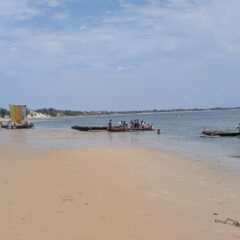
After a leisurely breakfast, I joined a few fellow travellers for a little excursion up the coast. We decided to hire some pousse-pousses to take us to Madiorano, a small hamlet about 7 km further up the coast. We had expected a fairly flat route and an easy ride – and for us passengers, it actually was. The seemingly endless succession of ups and downs was a rather different story for the cyclist – and the other person pushing from behind. In the end it took us a good 40 minutes to get there. Not quite the quick trip we had anticipated!
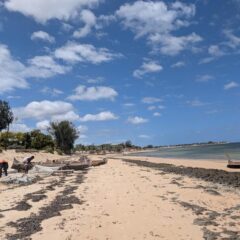
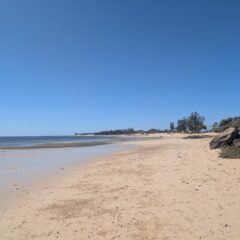
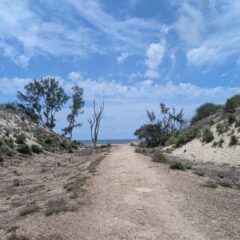
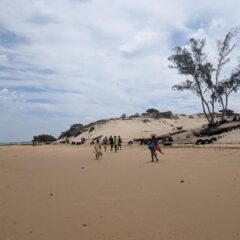
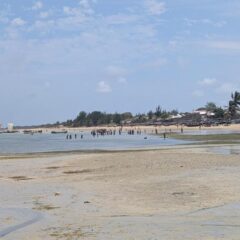
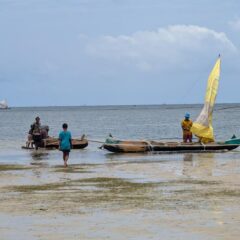
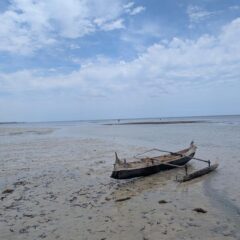
From Madiorano, we continued on foot towards the beach and Ambolimailaka, home to a small fishing “port” – essentially a few pirogues pulled up on the beach. The closer we got, the more children came up to us, asking for gifts. What started as a few encounters gradually became rather overwhelming, and eventually we decided that we’d had  enough and turned around and headed back for the hotel.

Long Live the Queen (of Isalo)

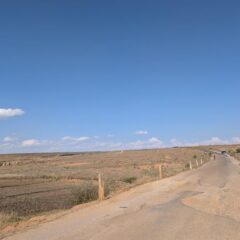
After two days exploring Isalo, we were heading further south-west towards the coast . a trip of about 265 km.

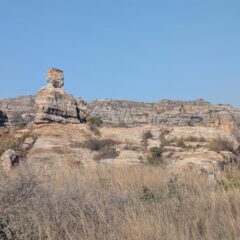
We made a brief stop early in the drive to see La Reine de Isalo – one last look at the characteristic rock formations of the region before continuing our journey.

Some toilet and snack stops later, we made it to Toliara, where we had a few administrative errands to take care of: picking up flight tickets, changing money and trying our luck at the ATMs. Not exactly the most exciting part of traveling, but occasionally these things need to be done.
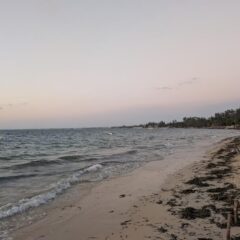
From Toliara, we continued north towards Ifaty, our destination for the day. By the time we arrived, the sun was setting – a long day on the road, but we had finally reached the coast and could look forward to a change of scenery.
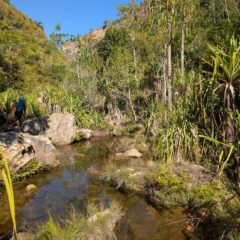
Lemurs, Pools and Better-than-IKEA Meatballs

After a fairly uncomfortable first night, things improved considerably: a much better night’s sleep, another good breakfast and an encounter with a boa to get the day started – our last day in camp.

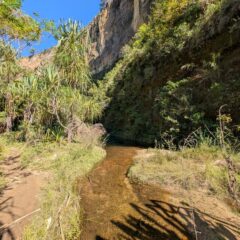
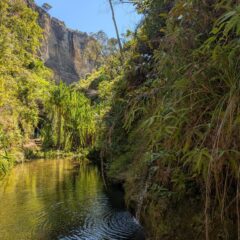
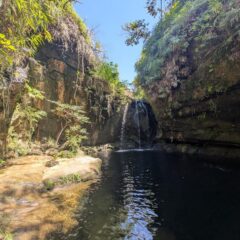
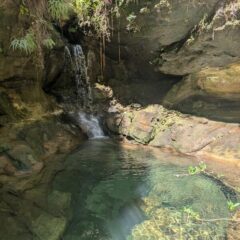
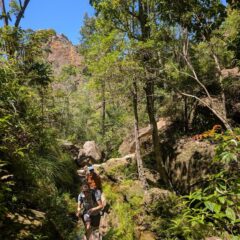
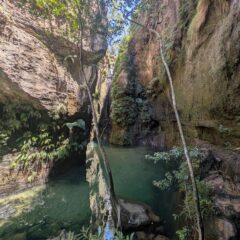
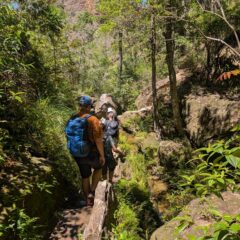
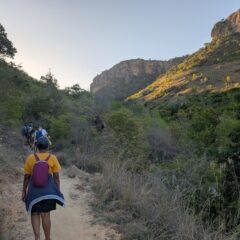
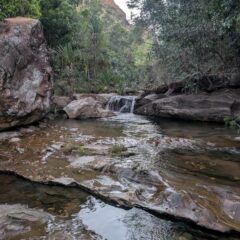
We headed out for our hike, this time a shorter one, setting off directly from the camp. After about an hour, we reached the Piscine Bleu and Piscine Noir (the two are about 50m apart) – two natural pools both offering the opportunity for a refreshing dip. On the way back, some of us – myself included – took a little detour to visit the Cascade des Nymphes. Eventually, we made it back to camp, where the local population of ring-tailed lemurs was waiting to provide some more entertainment.

Another good lunch followed, before it was time to pack up and leave our temporary home in the national park. Well, most of the packing and cleaning had already been taken care of for us. Back at the bus, we headed out of the park and returned to the hotel (with a short stop at the local supermarket on the way). Time for a proper pool, a warm shower and, naturally, some more Rhum Arrangé – this time the Pok-Pok (physalis) variety.

Dinner brought another culinary highlight: meatballs. And fairly good ones, too – easily beating IKEA’s famous Köttbullar. After two days in the wilderness, the hotel comforts felt particularly good – even if the meatballs were arguably the real highlight.

From Handmade Paper to the Wilderness of Isalo

Today started with a visit to a traditional papermaking workshop in Ambalavao. The local Antaimoro people have a long tradition of papermaking, associated with the arrival of Muslim migrants and their writing traditions. We got to see how the paper is still made by hand from the bark of local plants known as avoha, sometimes decorated with delicate flowers. Of course, there was also an opportunity to browse the finished products and perhaps pick up a souvenir or two.

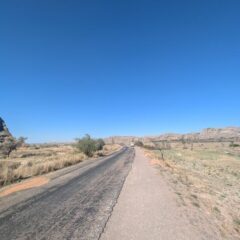
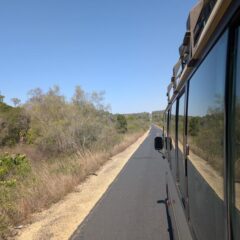
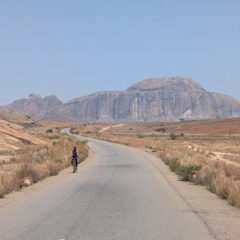
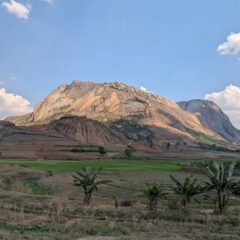
The next leg was another 230 km, this time towards Ranohira, the gateway to Isalo National Park. The route took us through changing landscapes, with the impressive Andringitra mountain massif providing a backdrop along the way.

On arrival in Ranohira, we had about an hour at the hotel, a welcome opportunity to recharge our electronics and (for some) to get a pool fix. There was little time to settle in though: soon it was back onto the bus for the final stretch of 6 km, taking us right into the national park.

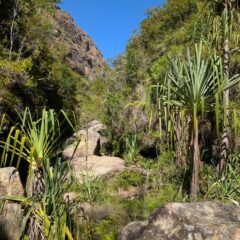
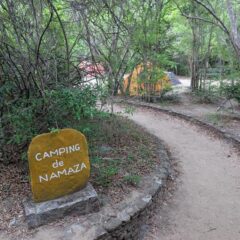
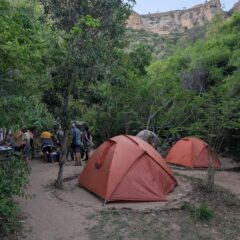
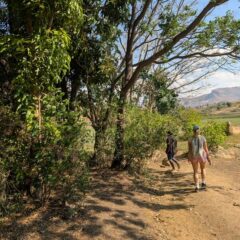
From the parking area, we still had another kilometer to walk to reach the campsite, which was to be our home for the next two nights. We had arrived at the starting point of our next adventure: two days of trekking through the landscapes of Isalo National Park.

Lemurs, Rocks and the Ongoing Penguin Shortage

We reached the Anja Community Reserve in the afternoon, ready for a lemur-heavy, penguin-free walk through the forest. The walk took about two hours, and there was certainly no shortage of ring-tailed lemurs. They were remarkably relaxed around humans, often coming very close – almost as if they had got used to being the main attraction. Some were even carrying babies on their backs, making for some particularly nice photo opportunities.

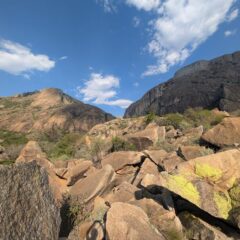
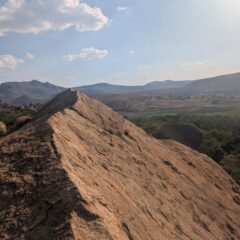
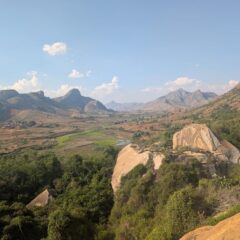
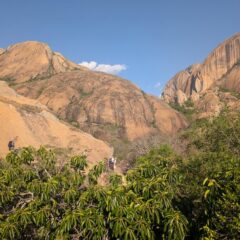
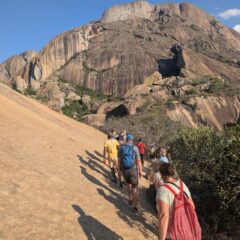
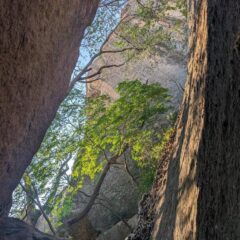
After spending quite some time watching the lemurs (and about ten rolls of film later), we continued the walk up among the rocks, where we were rewarded with views across the valley. From there, the trail led us back past the caves where the lemurs sleep before eventually bringing us back to the parking lot.

The final stretch of the day was a mere 15 km to our hotel in Ambalavao. And there was a culinary reward waiting for us: some delicious Madagascan sausages for dinner. After a day of lemurs, photographs and rocky viewpoints, the sausages made for a rather satisfying end to the day.